
You are here
News Feeds
Readers’ wildlife photos
We have no more batches in the tank, so if you have photos, send them along. Thanks.
Today’s final tranche comes from reader Ephraim Heller, which will be in two parts. Ephraim’s captions and IDs are indented, and you can enlarge his photos by clicking on them:
Q: Why do chickens (Gallus gallus domesticus) in Trinidad & Tobago cross the roads?
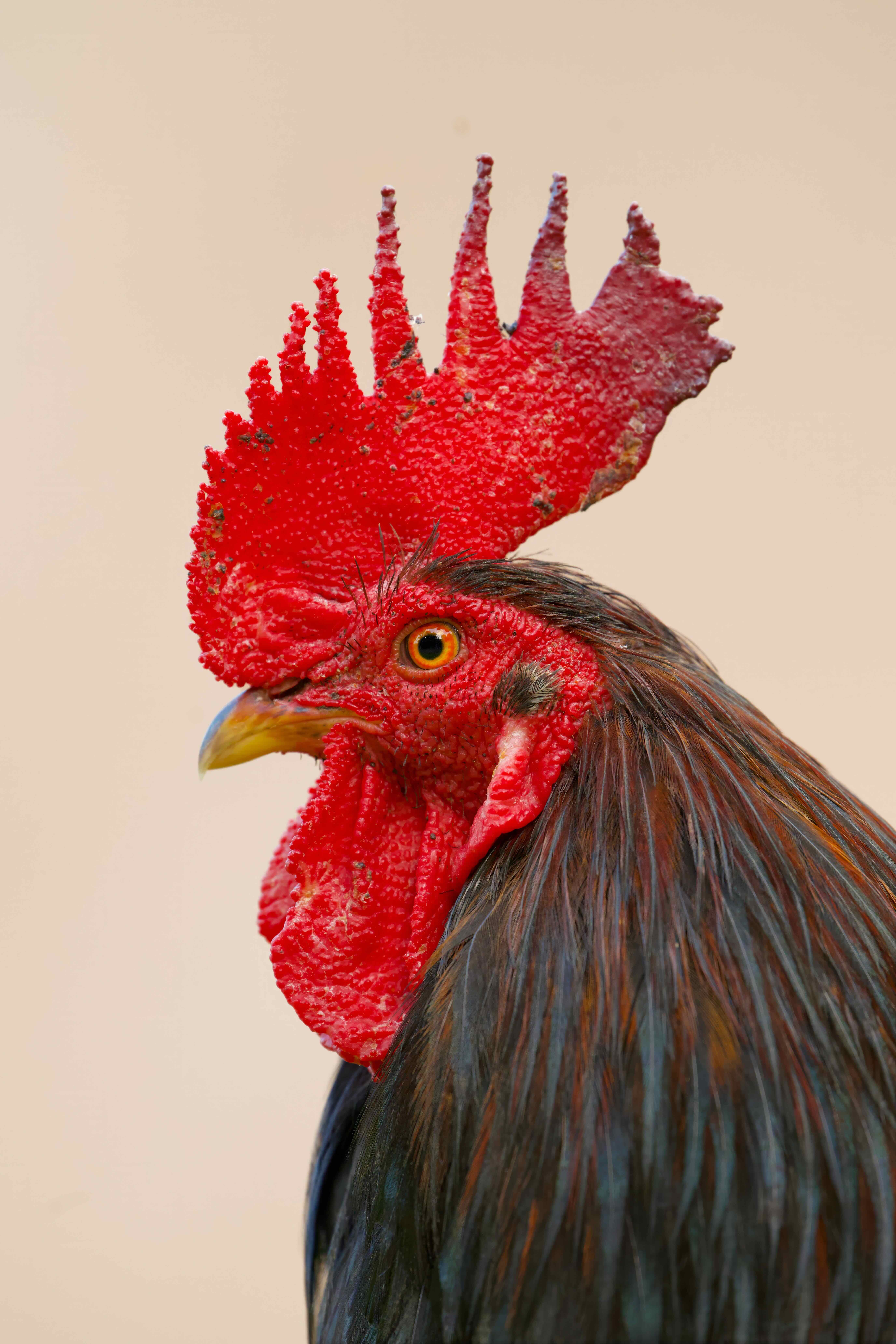
A: To eat the tarantulas.
During my recent visit to Trinidad and Tobago, a local birding guide explained that one of the reasons people commonly keep free-range chickens in their yards is to eat the tarantulas. This gave me a new respect for these domestic fowl, as I witnessed venomous tarantulas larger than my XXL-size hands, such as this female Trinidad chevron tarantula (Psalmopoeus cambridgei):

Trinidad harbors a diversity of arachnids that rivals anywhere in the Neotropics. On my night walks with my new macro lens I observed spiders (order Araneae) and harvestmen, also known as daddy long legs (order Opiliones). Both arachnids are eight-legged members of the class Arachnida, but they belong to entirely separate orders and are not closely related within that class.
Returning to the Trinidad Chevron tarantula: it constructs silken tube retreats in tree crevices, behind bark, and among epiphytic plants. It also readily adapts to human structures (e.g., tin roofs, metal pipes, and abandoned buildings) making it something of a synanthrope:

Females are large and fast-growing, reaching 18 cm (7 inches) in leg span, with striking chevron-shaped dark markings on the abdomen and green-brown coloration accented by red or orange flashes on the legs. Males are smaller, with a more uniform grey-brown appearance, and can mature in as little as one year. The species is notable for its broad diet: bats, frogs, lizards, grasshoppers, mice, and other insects have all been documented as prey.
Pharmacologically, the Trinidad chevron tarantula is of medical interest. Its venom is the source of psalmotoxin and vanillotoxin – inhibitor cystine knot (ICK) peptides that may have therapeutic applications in stroke treatment.
The pinktoe tarantula (Avicularia avicularia), is the most commonly encountered tarantula in Trinidad and Tobago. This arboreal species is named for the distinctive pink coloration on the tips of its legs in adults:
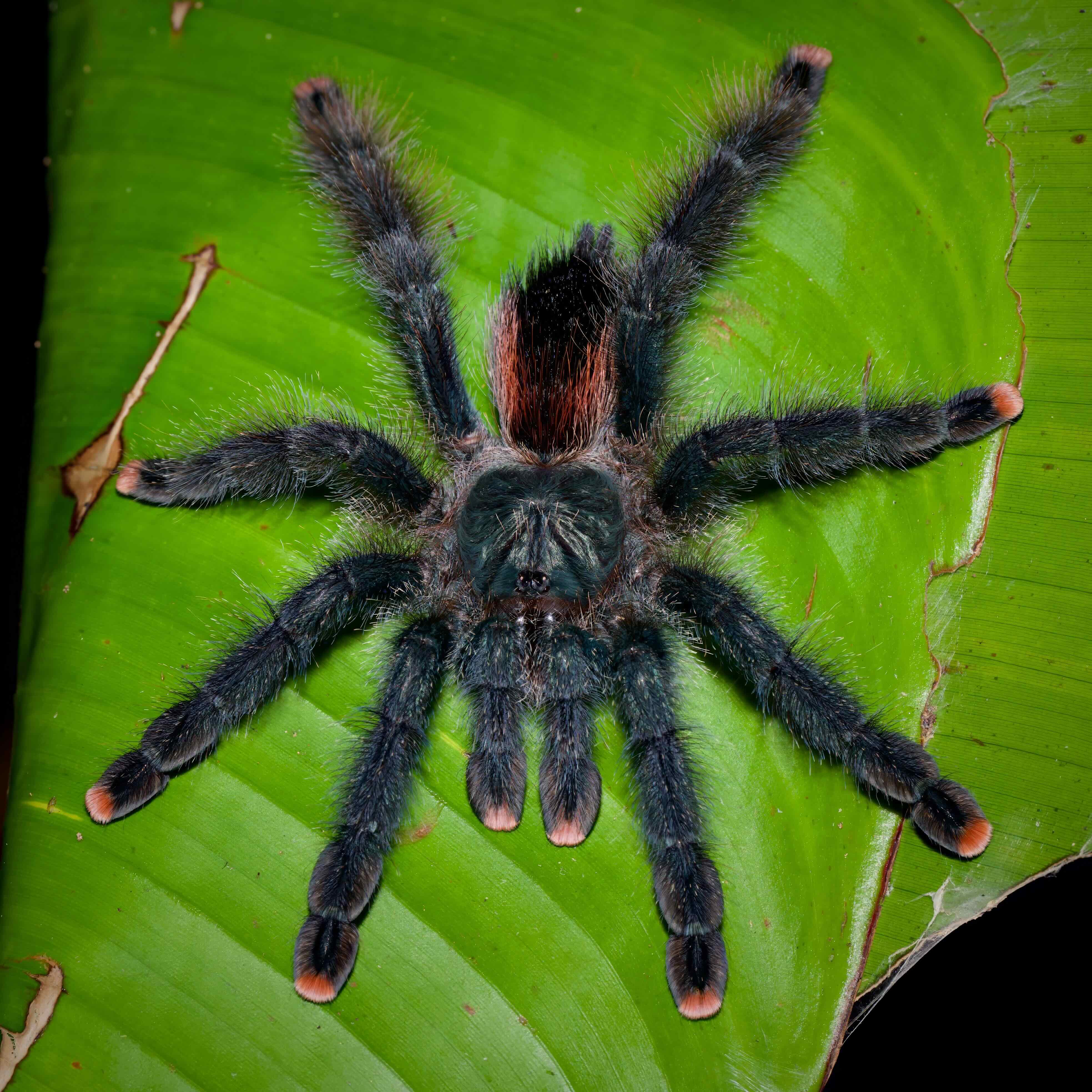
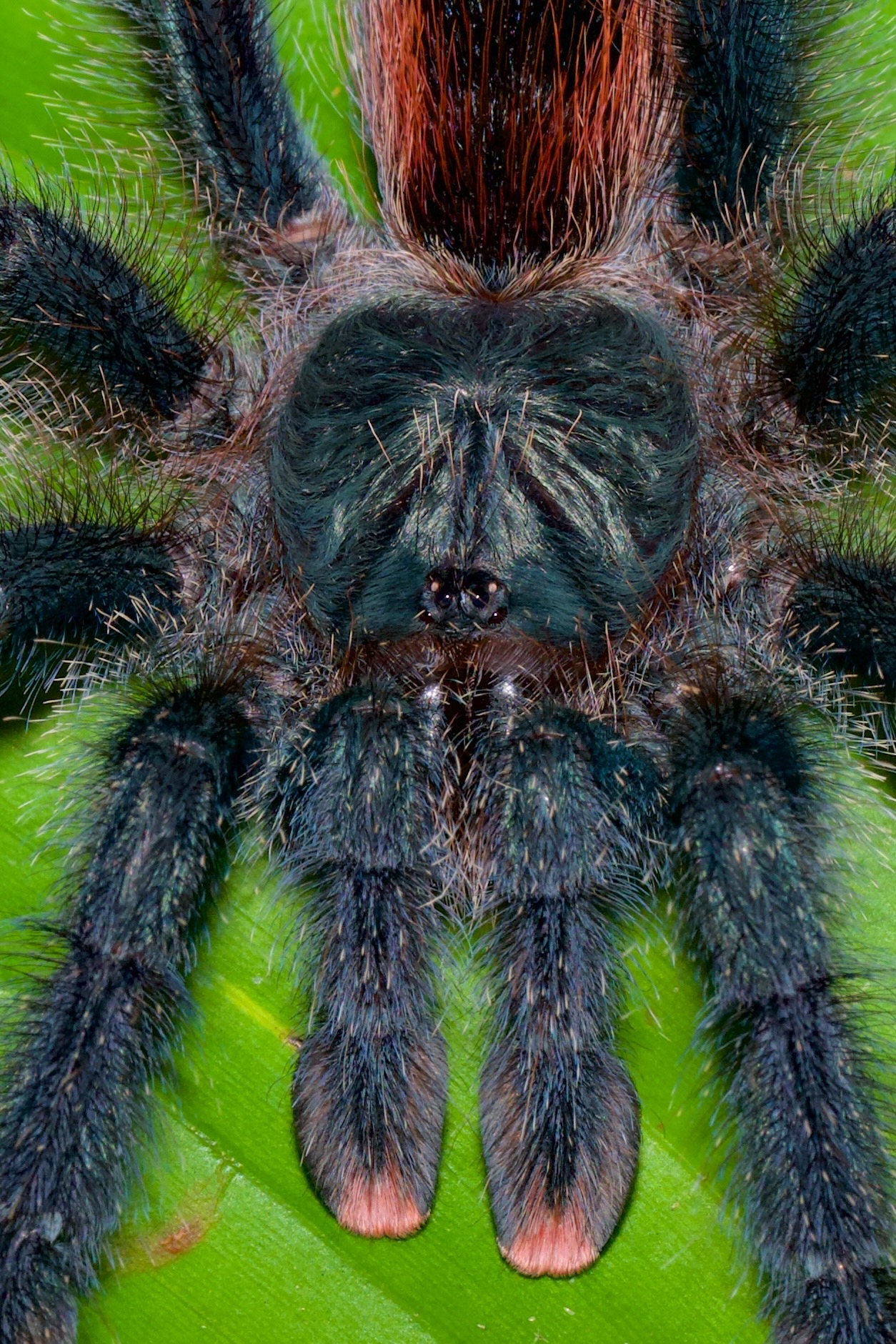
Adults reach about six inches in leg span. They are ambush predators that construct silken retreats and trip lines in tree canopies, using webbing as both trap and sensor. Unlike most tarantulas, pinktoes can jump short distances (3-4 cm), and their defensive repertoire includes propelling feces at threats, a behavior that, while unglamorous, is effective. Their venom is mild, even by New World tarantula standards. Here’s a closeup from the previous photo focused on the body:
The Giant Fishing Spider (Ancylometes bogotensis) is a semi-aquatic giant. Females reach roughly 26 mm in body length with an impressive leg span, while males are somewhat smaller at about 21 mm. These spiders walk on water using air-trapping hydrophobic hairs on their leg tips, much like water striders. When disturbed, they can dive below the surface and remain submerged for over 20 minutes by breathing air trapped in the hairs surrounding their book lungs. Their diet ranges from aquatic insects to small fish, frogs, lizards, and geckos:

Ancylometes bogotensis is sometimes confused with the infamous Brazilian wandering spider (genus Phoneutria, photo below): both are large, ground-active, nocturnal hunters with similar body plans. The name Phoneutria translates from Greek as “murderer,” and the genus has appeared in the Guinness World Records as containing the world’s most venomous spider. There are eight described species, found primarily in tropical South America with one extending into Central America.
Phoneutria species are best known for their potent neurotoxic venom, their characteristic threat display (raising the first two pairs of legs high to reveal banded leg patterns) and their wandering, non-web-building habits. They famously hide in banana bunches, boots, clothing, and dark shelters, which brings them into frequent contact with humans. Their venom contains a cocktail of neurotoxins, but fatalities are rare with modern medical treatment.
Though Ancylometes and Phoneutria were both historically placed in the family Ctenidae, Ancylometes was transferred to its own family (Ancylometidae) in 2025, reflecting the growing understanding that these semi-aquatic fishing spiders represent a distinct evolutionary lineage:

We now turn to a species of orb-weaver. The golden silk spider (Trichonephila clavipes) is one of the most conspicuous spiders in the Caribbean and Neotropical forests. Sexual dimorphism in this species is extreme: males are tiny (5-9 mm body length) and weigh roughly one-thousandth what a female does. Here is a female:

The silk itself is remarkable. It has a golden hue visible to the naked eye and is the strongest natural fiber known. Researchers have fully annotated the T. clavipes genome, identifying 28 unique silk protein genes. These spiders produce and utilize seven different types of silk. Their large, asymmetric orb webs can exceed a meter in diameter, and in the South Pacific, relatives of Trichonephila spin webs strong enough to be used as fishing nets by indigenous communities:

Project Hail Mary is a spiritual sibling to The Martian - and it's fab
What is a galaxy? That's a surprisingly difficult question to answer
Mathematics is undergoing the biggest change in its history
Scientists Find the First Direct Evidence of Binary Asteroids Sharing Material
Scientists occasionally have a hard time figuring out whether data they are seeing is an actual physical phenomenon or just a trick of their instrumentation. A new paper in The Planetary Science Journal from Jessica Sunshine and their colleagues at the University of Maryland describes one such confusing scenario. In this case, the researchers noted some fan-like patterns across the surface of Dimorphos, the asteroid hit by NASA’s DART mission, and thought it might be a trick of their camera. But after some image correction, computation, and physical experimentation, they determined the patterns were caused by the first-ever documented cases of material transfer between two asteroids.
Human populations evolved in similar ways after we began farming
Scientists may have discovered a brand-new mineral on Mars
Cosmic voids look empty but they may be tearing the universe apart
Cosmic voids look empty but they may be tearing the universe apart
Skeptoid #1031: Unearthing Ancient Advanced Civilizations
An exploration of the validity of the Silurian hypothesis, which posits the existence of a pre-human intelligent race on Earth.
Learn about your ad choices: dovetail.prx.org/ad-choices“Vinay Prasad Loves President Trump”. That, Plus 12 Other Thoughts on the End of Dr. Vinay Prasad’s Sabbatical From UCSF
The bottom line is this: when given the opportunity to prove his real-world prowess, Dr. Vinay Prasad failed.
The post “Vinay Prasad Loves President Trump”. That, Plus 12 Other Thoughts on the End of Dr. Vinay Prasad’s Sabbatical From UCSF first appeared on Science-Based Medicine.NASA’s DART asteroid smash shows we could deflect a future threat
Scientists create slippery nanopores that supercharge blue energy
Why is black rain falling on Iran and how dangerous is it?
We’ve only just confirmed that Homo habilis really existed
How Jagged Moon Dust Could Support Future Astronauts
Lunar dust can be a pain - but it’s also literally the ground we will have to traverse if we are ever to have a permanent human settlement on the Moon. In that specific use case, it’s clingy, jagged, staticky properties can actually be an advantage, according to a new paper, recently published in Research from researchers at Beihang University, who analyzed the mechanical properties of samples returned by Chang’e 6 mission to the far side of the Moon.
Frailty sets in far earlier than you’d expect, but you can reverse it
A daily multivitamin may slightly slow rates of ageing
The JWST Reveals Some Puzzling Surprises in Jupiter's Northern Aurora
Jupiter's powerful, continuous aurorae dwarf those of Earth. Scientists know that Jupiter's Galilean moons created bright spots on Jupiter's northern aurora. The JWST observed these bright spots and generated infrared spectra of them for the first time. Those observations showed that Io's bright spot is extremely variable in both temperature and density, and researchers want to know why.
Terraforming Mars Isn't a Climate Problem—It's an Industrial Nightmare
Even when the idea of terraforming Mars was originally put forward, the idea was daunting. Changing the environment of an entire planet is not something to do easily. Over the following decades, plenty of scientists and engineers have looked at the problem, and most have come to the same conclusion - we’re not going to be able to make Mars anything like Earth anytime soon. A new paper available in pre-print on arXiv from Slava Turyshev of NASA’s Jet Propulsion Laboratory, is a good explainer as to why.
Pages
